
 by
by 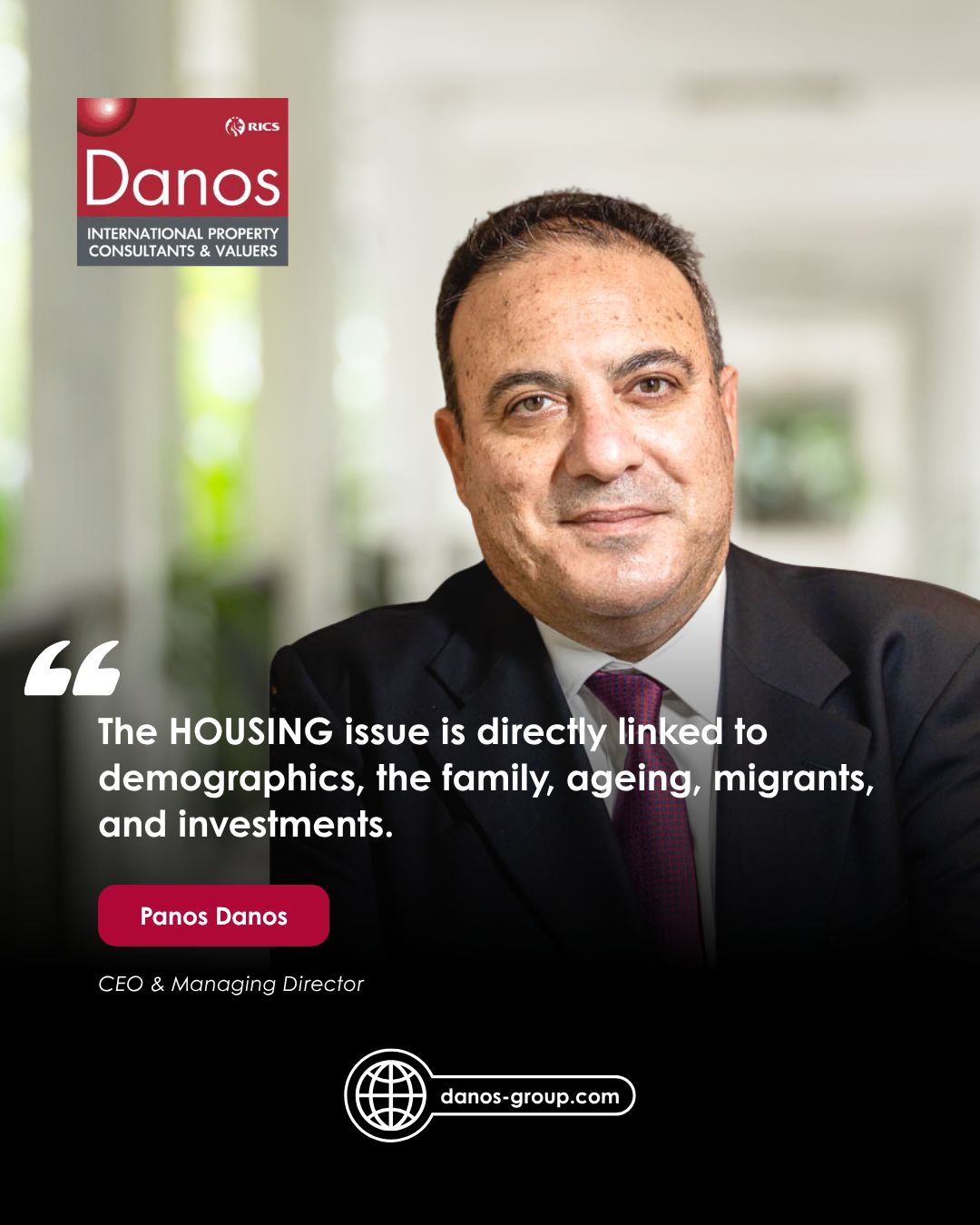 Housing has now become a major issue in Cyprus, whereas it had not been for many decades. In truth, we lived in a privileged environment. Loans were relatively accessible, self-building was common, small contractors operated widely, and the system of land-for-apartments exchange (“antiparochi”) was prevalent. Then came the 1990s. Large developers emerged, shifting the concept of housing into purely economic terms and away from simple family accommodation.
The economic crisis followed. Previously, the loss of one’s home was almost unimaginable. During the crisis, investment funds and short-term rental platforms (Airbnb) expanded, and housing increasingly became a commodity.
When the crisis ended, housing had become financially inaccessible, especially for young people, whereas the opposite should have occurred after a crisis. The Golden Visa programme, and even today the acquisition of a visa through an investment of only €300,000, further contributed to the housing crisis. Only recently, the Government announced that the Housing Financial Assistance Scheme for young couples was intended to support 400 beneficiaries, yet 1,018 justified applications were submitted.
At the same time, it was announced that in Cyprus, in 2025, the number of people living in poverty increased by 3,000 individuals. Therefore, despite state measures, the problem is not being resolved but is instead worsening.
Young couples lack financial flexibility and struggle even to rent a home. This clearly also affects demographics. In addition, 1 in 5 Cypriots is at or below the poverty line.
Ageing in Cyprus is progressing steadily. This means that elderly people over 65 live longer and remain in their homes for much longer than in the past, reducing the availability of housing units. These are our fellow citizens who, for the most part, own their homes. On the other hand, divorces are increasing, and this factor also contributes to higher demand. Demand is also increasing due to migrants, especially those coming to Cyprus from northern countries because of the climate. Therefore, we must readjust our housing strategy in a hybrid and effective way in order to properly address homelessness. The Government focuses on planning incentives, subsidies, and the development of residential units on state-owned land. However, there is no single body that can diagnose the problem and its real dimensions, secure sufficient resources, take responsibility for the overall and individual handling of the issue, and at the same time oversee the optimal socioeconomic development and management of all public property.
Indicatively, vacant buildings could be purchased and, in cooperation with private entities, renovated appropriately and returned to the market. Similarly, additional incentives could be provided for the development of affordable housing, such as higher building density allowances than currently permitted, public-private partnerships for the development of social rental housing on selected state land, taxation of idle properties, tax relief for housing developments aimed at young couples, pensioners, and middle-income households, rent subsidies, preferential loans for those in need of housing, subsidies for upgrading homes into green buildings and for those requiring substantial renovation, as well as subsidies for the creation of healthy residential complexes that support the physical and psychological wellbeing of their residents — for example through WELL and LEED certification.
In Austria, 1 in 5 homes is social housing. In Switzerland, even individuals with an annual income of up to €100,000 may qualify for rent subsidies. In Belgium, citizens over the age of 65 are entitled to rental assistance. Barcelona banned Airbnb in order to increase the availability of long-term rentals. Spain abolished visas linked to housing acquisition, thereby increasing supply in an effort to contain property prices. In Greece, in areas where demand significantly exceeds supply, or where development needs to be reduced for environmental reasons, the threshold for obtaining a visa was increased from €250,000 to €800,000.
Of course, all this effort to ensure affordable housing for everyone — since housing is a necessity and not a luxury — requires state and European funding. This is difficult, given the current and future demand for greater spending on defence programs. It is precisely here that the state must focus on partnerships with private developers and investors in order to secure the financial capacity needed to increase housing supply. Asupply that is a right and not simply a commercial transaction. This is how the conditions for family life and prosperity will be created.
Cyprus has certain particularities, such as the high rate of homeownership and the stigma associated with living in social housing. Therefore, efforts must also focus on changing mentality and culture, as well as promoting coexistence and social integration. After all, housing policy is a barometer of the social sensitivity and progress that every government wishes to demonstrate. Housing development must of course be accompanied by adequate infrastructure, services, recyclable materials, and zero-carbon-footprint practices.
It should also be taken into account that single-parent families are continuously increasing in Cyprus, while 55% of Cypriot adults declare themselves single. In addition, a small percentage of Cypriots have same-sex partners. Elderly people require appropriate services and amenities. Housing must serve EVERYONE, practically and proportionally in terms of cost, location, organization, and environment. Housing should promote inclusion and provide spaces based on respect and responsibility while keeping pace with standards and modern trends. Technology must also be utilized for the rapid construction of quality housing.
The responsibility is clearly political. In Cyprus, the Land Development Corporation plays an important role in housing low-income families. However, it lacks the necessary flexibility and is characterized by bureaucracy and a lack of speed.
Article by: Panos Danos, CEO & Managing Director of Danos, an alliance member of BNP PARIBAS Real Estate